
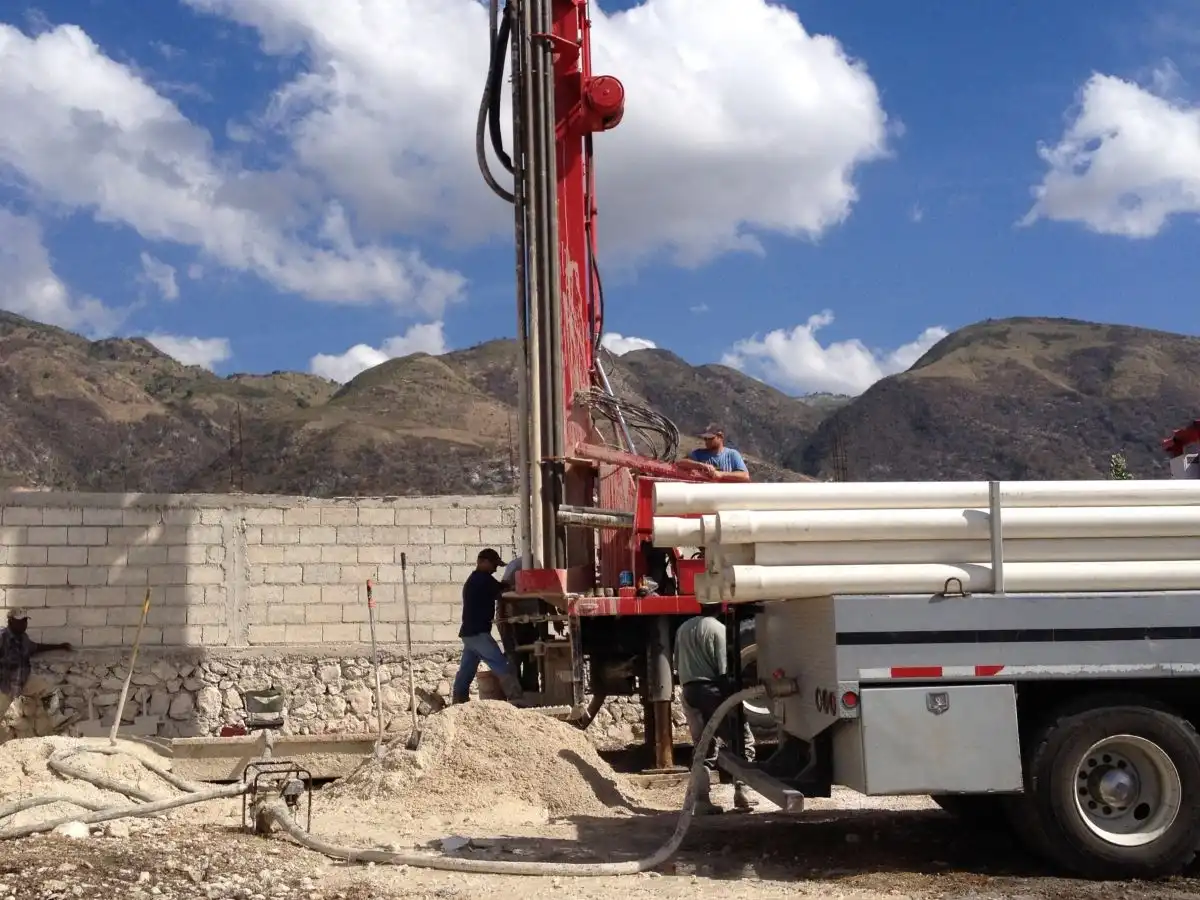
Industry data shows that commercial auto remains a high-volume claim line, with claim frequency increasing since 2020 and loss severity rising sharply over the last decade. When heavy drilling rigs with attached equipment are involved, a single accident can quickly become a catastrophic loss, according to Verisk ClaimSearch® and the Insurance Information Institute.
For water well drilling companies that routinely move large, top-heavy rigs on public roads, commercial auto is not just a transportation exposure; it is a core operational risk.
Why Commercial Auto Claims Hit Water Well Drilling Fleets Harder
Water well drilling operations combine several of the highest-risk commercial auto characteristics:
- Oversized and overweight drill rigs
- High center-of-gravity vehicles
- Permanently and semi-permanently attached drill equipment
- Frequent transitions between rural jobsites and public highways
- Complex loading, unloading, and backing exposures
Commercial auto claims involving heavy equipment are more likely to trigger:
- Severe third-party bodily injury
- Significant property damage
- Equipment loss disputes
- Umbrella and excess liability erosion
- Multi-policy coverage conflicts
This is why commercial auto insurance coverage verification and limit adequacy are critical for drilling contractors.
The Coverage Gap Most Drilling Contractors Don’t See Coming
Many water well drilling companies believe they are properly insured—until a loss occurs.
Common commercial auto coverage issues include:
- Attached drill equipment ambiguity
Is the mast, rotary, or top drive covered under auto physical damage, inland marine, or neither? - Incorrect valuation methods
Actual cash value vs. stated value vs. agreed value can mean six- or seven-figure gaps. - Misclassified vehicle use or radius
Incorrect ratings can jeopardize claims or lead to major audit adjustments. - Hired and non-owned auto blind spots
Crew pickups, rental trucks, and borrowed lowboys often fall outside assumed coverage. - Umbrella misalignment
Excess liability is only effective if the underlying auto definitions and limits match reality.
If your insurance program doesn’t mirror how your drill rigs move, load, and operate, you are exposed.
Top 5 Commercial Auto Risk Mitigation Strategies for Water Well Drilling Companies
- Formal Drill Rig Move Procedures
- Written pre-trip inspections specific to drill rigs
- Mast position, lock pins, swing locks, and tool security checks
- Route planning for grades, bridges, overhead clearance, and turn radius
- Clear authority for go/no-go decisions
- Attached Equipment and Load Securement Controls
- Documented standards for securing drill pipe, tooling, compressors, and mud systems
- Photo documentation before departure
- Secondary checks after rough roads or first stops
- Backing, Spotting, and Jobsite Traffic Management
- Mandatory spotter use for backing
- Defined exclusion zones around rigs
- Cones and visual controls on congested or residential jobsites
- Driver Qualification and Drill-Rig-Specific Training
- CDL compliance is the baseline, not the solution
- Training on:
- High center-of-gravity handling
- Extended braking distances
- Shoulder drop-off recovery
- Intersection and turning loss scenarios
- Fatigue management for long job days and end-of-day moves
- Maintenance, Telematics, and Near-Miss Reporting
- Preventive maintenance focused on brakes, tires, suspension, and lighting
- Telematics used to correct a few high-risk behaviors (speed, hard braking, aggressive turns)
- Near-miss reporting tied to monthly operational improvements
Why Verifying Commercial Auto Limits Matters More Than Ever
Commercial auto liability claim severity has increased dramatically across the industry. For water well drilling fleets, $1M limits are often no longer adequate, especially when drill rigs, crews, and third parties are involved.
Verifying:
- Auto liability limits
- Physical damage valuations
- Equipment definitions
- Umbrella attachment points
…can mean the difference between a manageable claim and a business-threatening loss.
Final Thought for Water Well Drilling Contractors
Your biggest loss potential is rarely the drill itself; it’s the drive to the jobsite.
If you operate drill rigs on public roads, commercial auto insurance is not just a policy; it’s a risk management system that must be engineered as carefully as your drilling operation.
If you’d like, I can help you:
- Audit commercial auto + equipment coverage for drill rigs
- Identify common coverage gaps specific to drilling fleets
- Align limits with today’s loss severity realities
Just tell me the type of rigs you run, average operating radius, and whether you transport on lowboys or self-propelled units, and I’ll tailor the framework.
Have questions? Contact:

Jason Ehlert
Commercial Insurance Advisor
Call: (253) 328-7740Book an Appointment»
...
Read Jason's full bio