
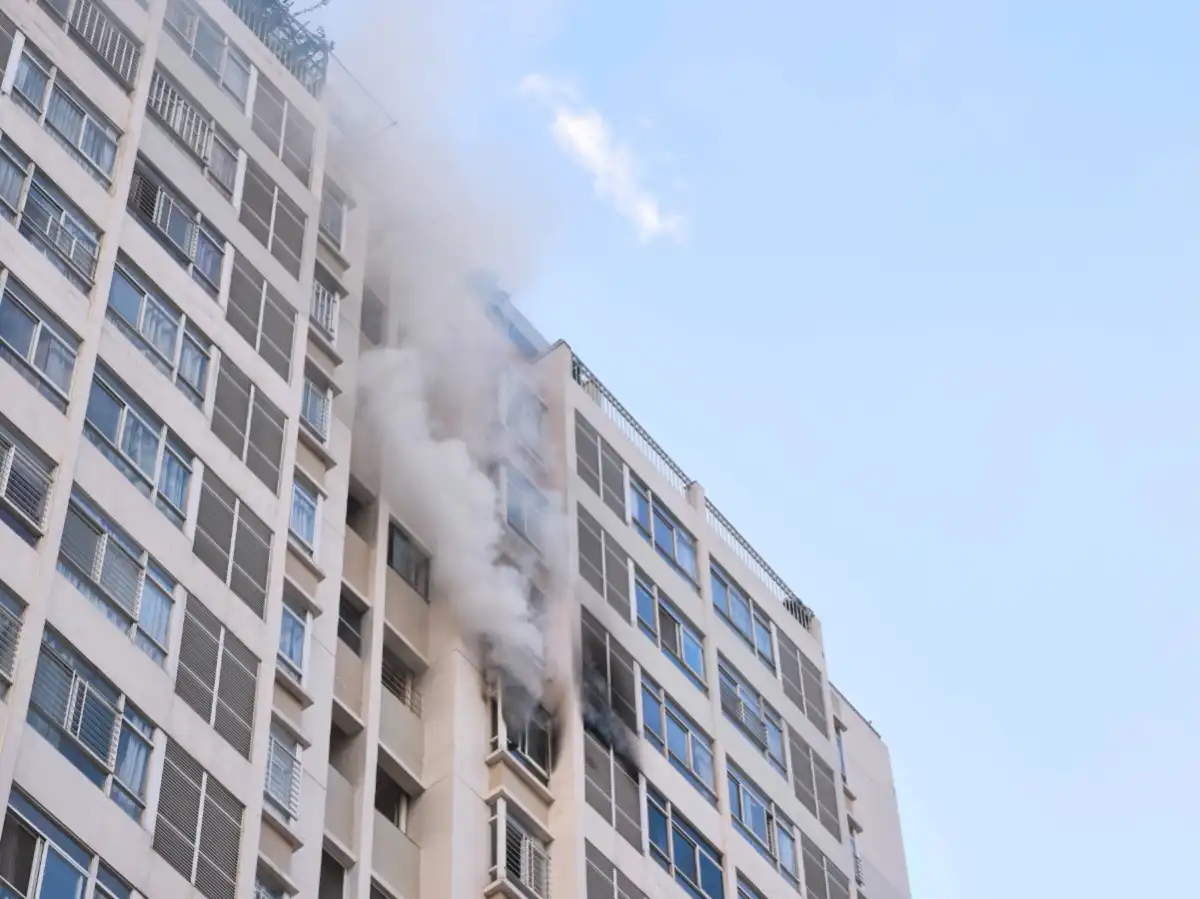
Every multifamily operator I work with has a loss story. This one belongs to a regional operator with several thousand units and more than $1 billion in insured building values, a well-run company by any measure.
Their story is worth telling because the most expensive part wasn’t the fire. It was everything that came after.
The fire was only the first bill
One winter, a fire started in a single unit at one of the operator’s communities. Investigators believed a resident’s guest had set the resident’s couch on fire.
The damage was severe, and the insurance claim ultimately closed with more than $9 million paid.
The loss did not appear to result from poor maintenance or a failure of the property’s safety systems. Someone who didn’t live there allegedly started a fire in a unit the operator did not occupy. Yet most of the resulting property damage fell on the owner’s insurance.
Here is the number that matters: over the next five years, that one fire made up more than 80% of the company’s total insurance losses.
Everything else the operator experienced during those five years, across thousands of units, came to less than $2 million combined. That works out to roughly $400,000 a year.
Without the fire, the numbers told the story of a well-run portfolio averaging about $400,000 in annual losses. But that wasn’t the complete picture insurance companies saw. They also saw the $9 million fire.
So, the fire kept billing them.
It remained in the company’s five-year loss history at every renewal. In one year, the rate used to calculate its property insurance premium increased by roughly 40%. On a portfolio of this size, that change represented approximately $900,000 in additional annual premium, based on the operator’s figures and the assumptions used in the analysis.
A loss from 2022 is still one of the largest insurance costs in the operator’s projected 2027 budget.
Why did so much of the loss fall on the owner’s insurance?
Like many operators, this company required residents to carry renters insurance. But the requirement mostly lived on paper. The operator did not have a consistent process to verify coverage and make sure it stayed active.
When the fire happened, the operator could not confirm that the resident had an active policy that would help pay for the damage. Recovering money directly from the people believed to be responsible also appeared unlikely.
The operator had no documented resident-risk program to show what it was doing to prevent similar losses from falling entirely on its insurance in the future.
What remained was a $9 million claim on the owner’s property insurance. That claim appeared in the company’s loss history and continued to affect its renewals for years.
Requiring renters insurance in the lease is a start. But without a process to verify coverage, track it, and address canceled or expired policies, the requirement may end up offering the property owner little protection.
What changes when a structured resident-risk program is in place?
This is the work I now do with operators through RentProtect, our resident-risk program. It’s worth being clear about what a program like this might and might not have changed.
A possible source of payment. With verified enrollment, a resident may have liability coverage that can help pay for certain losses caused by the resident or a guest. What the policy pays depends on its terms, limits, and exclusions.
Programs like this may provide limits such as $100,000 for a covered incident. Compared with a $9 million fire, that is a small portion of the total damage. I won’t oversell it: it can help, but it would not solve the entire problem.
Money set aside for certain resident-caused losses. Depending on how the program is structured, resident payments can help create a pool of money for certain covered losses caused by residents or their guests.
For an operator of this size, one sample model projected approximately $1.4 million annually for that purpose. That figure depends on assumptions about enrollment, participation, program costs, and claims.
Under the modeled program, certain losses, such as a kitchen fire, an overflowing tub, or damage caused by a guest, could potentially be paid through this program before the full loss falls on the owner’s property insurance. Whether and how the program responds would depend on the program rules and the details of the claim.
A clearer story at renewal. This might be where the program provides the most long-term value.
With a documented program in place, the operator can provide more information about a resident-caused fire. It can show whether the resident was enrolled, whether coverage was active, what caused the loss, whether anyone else may help pay for it, and what the operator is doing to manage similar risks going forward.
That information may help insurance companies see the difference between a loss caused by the operator’s maintenance or management and a loss caused by a resident or guest.
Insurance companies will still review the entire portfolio, and no program can guarantee a lower rate or a better renewal. But a clearer explanation gives them more than a single $9 million claim with little context.
Residents with their own protection. Depending on the policy, enrolled residents may also have coverage for their belongings and personal liability.
That protection can provide important help after a covered loss. It may also reduce some of the confusion and conflict that can follow a major fire.
What it doesn’t do, because honesty matters here
A resident-risk program would not have prevented this fire. It also would not have paid the entire $9 million loss.
A resident-level program is not designed to replace the owner’s property insurance after a total building loss. The property policy still handles major damage, based on its coverage, limits, deductible, and exclusions.
The program also would not directly address the other two major types of claims in this operator’s loss history.
The first involved winter slips and falls in parking lots and on steps. Those claims had hundreds of thousands of dollars set aside for possible future payments. Reducing that risk calls for clear snow-and-ice procedures, documentation, and regular property inspections.
The second involved fire-suppression lines that burst during a cold snap. Reducing that risk calls for building inspections, maintenance, temperature monitoring, and freeze-prevention procedures.
Three categories, three different tools. Anyone who presents one product as the answer to every type of loss is selling, not advising.
The lesson I’d take into your next multifamily insurance renewal
Pull your insurance claim history from the past five years and sort each claim into one of three categories:
- Resident-caused: Damage caused by residents or their guests
- Property conditions: Injuries or damage connected to parking lots, walkways, stairs, or other shared areas
- Building systems: Problems involving plumbing, heating, fire-suppression systems, or other parts of the building
Many operators I meet with are surprised twice. First, they are surprised by how many losses were caused by residents or guests. Then they are surprised by how little their current approach does to address that risk.
Next, ask a harder question: Did more than one insurance company have a meaningful opportunity to compete for your business at your last renewal?
The process is not always straightforward. Depending on the insurance company and timing, a market may already be working with another broker or may not be available for other reasons. But if no meaningful alternatives were explored, you may not have received a complete picture of your options.
You can’t undo a loss that is already in your history. But you can prepare for the next one.
The question is whether the next resident-caused loss will fall mostly on your property insurance again or whether you will have a documented program, active resident coverage, and other possible sources of payment in place.
If you’d like to see what a resident-risk program could look like for your portfolio, I’m glad to run an illustrative model. And if your current setup beats what I can show you, I’ll tell you that honestly.
Telly Longhurst
Insurance Advisor, Leavitt Select Insurance Services
(801) 308-1500 ext. 8888
This article is based on a real client experience. Names, locations, and certain identifying details have been omitted, generalized, or rounded to protect confidentiality.
Historical claim and premium figures reflect the information available for this specific account. They should not be interpreted as typical or guaranteed results.
Program figures are illustrative estimates based on a model and its assumptions. They are not guarantees of coverage, available funds, claim payments, insurance savings, or renewal results. Actual program features and outcomes depend on the applicable policies and program documents, property characteristics, resident enrollment and participation, loss experience, underwriting, and state and local laws. All insurance coverage is subject to the terms, conditions, limits, deductibles, and exclusions of the applicable policies.
Frequently Asked Questions
-
What are loss runs, and why do they matter?
Loss runs are reports showing an operator’s insurance claims over a set period, often the past three to five years. They may include the cause of each loss, the amount already paid, and money the insurance company has set aside for possible future payments.
Insurance companies review these reports when deciding whether to offer coverage and how to price it. Operators should review their loss runs before renewal, correct any errors, and be ready to explain large or unusual claims. -
What should multifamily operators look for in their loss history?
Start by sorting claims into three categories:
- Resident-caused losses: Fires, water damage, or other incidents caused by residents or their guests
- Property-condition losses: Slips, falls, or injuries involving parking lots, stairs, walkways, and shared areas
- Building-system losses: Damage caused by plumbing, heating, fire-suppression systems, or other building equipment
This makes it easier to see where losses are coming from and whether the operator has the right plan for each type of risk. A resident-risk program may help with certain resident-caused losses, but property conditions and building-system problems require different solutions. -
How long can a large claim affect an insurance renewal?
Insurance companies often review several years of claim history, commonly three to five years, although the exact period and importance of a claim vary by company and market conditions.
A large claim may continue to influence renewal decisions while it remains in the review period. That does not mean the claim is the only factor affecting the premium, but operators should be prepared to explain what happened and what they have done to reduce the chance of a similar loss. -
What happens if a resident’s guest causes damage?
The answer depends on the circumstances and the insurance policies involved. Coverage may be available through the resident’s policy, the property owner’s policy, another responsible party’s insurance, or another part of the resident-risk program.
Guest-related losses can be especially complicated, which is one reason operators should verify resident coverage before a loss occurs rather than trying to determine what is available afterward. -
Is requiring renters insurance in the lease enough?
Not necessarily. A lease requirement is a good starting point, but it offers limited protection if no one confirms that residents have the required coverage or tracks whether their policies remain active. A stronger process includes verifying coverage, monitoring cancellations or expirations, and following up when a resident no longer meets the requirement.
-
What is a resident-risk program?
A resident-risk program helps a multifamily operator manage certain losses caused by residents or their guests. Depending on how the program is structured, it may include renters insurance verification, resident liability coverage, documented enrollment, and a process for responding to eligible resident-caused losses.
Program features vary, so operators should review the actual coverage, costs, responsibilities, and limitations before deciding whether a program fits their portfolio. -
Can a resident-risk program prevent claims from affecting my insurance renewal?
There is no guarantee that a claim will stay off your insurance record or that a program will lead to a better renewal result. Insurance companies consider many factors, including past claims, property conditions, building values, location, market conditions, and the steps an operator has taken to manage future risks.
However, a documented program may provide useful context. Instead of presenting a large claim without explanation, the operator may be able to show what caused the loss, whether resident coverage was active, what recovery efforts were made, and what has changed since the incident.
Have questions? Contact:

Telly Longhurst
Insurance Advisor
Call: (435) 752-1351Book an Appointment»
...
Read Telly's full bio