
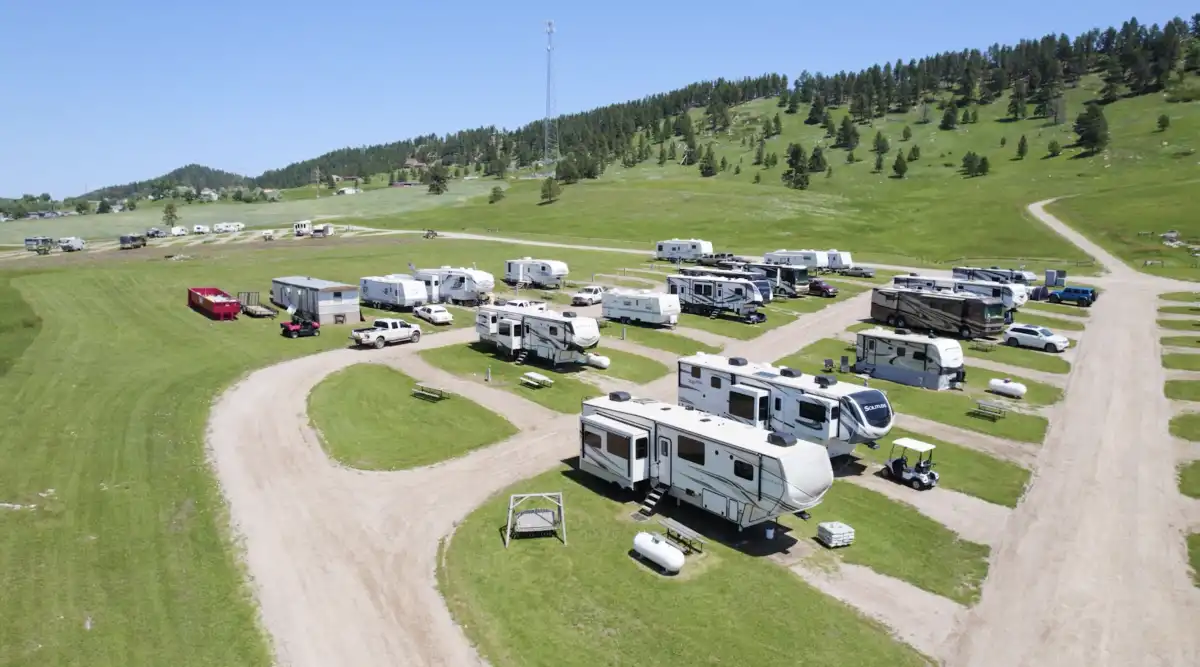
For a lot of RV park owners, that fear leads to some bad assumptions. Some quietly accept whatever renewal number lands on their desk, figuring they have no leverage. Others hold off on filing legitimate claims because they’re afraid of being dropped. And a few decide they’re simply uninsurable and stop shopping altogether.
Here’s the reality: one big claim rarely makes an RV park uninsurable. The insurance market is built to handle losses, that’s the entire point of it. What matters far more than the claim itself is the story around it: what caused it, what you did afterward, and how that story gets presented to underwriters. This article breaks down how carriers actually think about claims, what they look for when deciding whether to insure you again, and the practical steps that keep your RV park insurance options open after a tough year.
Does one big claim make an RV park uninsurable?
In almost every case, no.
A single large claim, on its own, does not make your RV park uninsurable. Insurance companies expect claims to happen. They price for them, reserve for them, and build entire underwriting models around them. A one-time, severe loss, especially one caused by something outside your control like a hailstorm or wildfire, is often viewed very differently than owners fear.
What actually gives underwriters pause is a pattern. Several smaller claims year after year tells a very different story than one significant loss followed by a clean stretch. We’ll come back to that distinction, because it’s one of the most important things to understand about staying insurable.
The myth that “one claim and you’re done” usually comes from a bad experience: an owner who got a steep renewal increase or a non-renewal notice and assumed the claim alone was the reason. Often, the claim was only part of the picture. Market conditions, outdated property values, or a policy that was never structured correctly in the first place can all play a role, and all of those are things that can be addressed.
Why a big claim feels worse than it usually is
Part of what makes a claim feel catastrophic to your insurability is timing. Large losses often hit during already-hard markets, when carriers are tightening guidelines across the board. When your renewal comes back higher, it’s easy to pin the entire increase on your claim when the broader market was moving in that direction anyway.
It also doesn’t help that the process is opaque. Most owners never get a clear explanation of how their claim is being weighed, so they assume the worst. The truth is that underwriters are looking at a much wider set of factors than a single dollar amount, and many of those factors work in your favor if they’re presented well.
What do insurance carriers look at after a claim?
From an underwriting perspective, a claim is a starting point for questions, not an automatic strike. When a carrier reviews your RV park after a loss, they’re trying to answer one core question: is this likely to happen again? To get there, they look at several things:
- The cause of the loss: Was it a weather event, a maintenance issue, a guest’s actions, or something structural? A one-time act of nature is viewed very differently than a preventable problem that was left unaddressed.
- Frequency versus severity: One large claim is treated very differently than a string of smaller ones. Underwriters generally worry more about frequency, because repeated claims suggest an ongoing risk-management problem rather than a single bad day.
- What you did in response: Did you fix the root cause? Add signage, repair the infrastructure, update a policy, improve lighting, or change a procedure? Corrective action is one of the strongest signals you can send.
- Time since the loss: A claim from three or four years ago, followed by a clean record, carries far less weight than something recent. Claims age out of the picture, and every clean year afterward helps.
- The overall operation: Your length-of-stay mix, amenities, maintenance practices, and management all still matter. A well-run park with one claim is a very different risk than a poorly-run park with the same claim.
Notice how much of that list is within your control. The claim already happened, but the response, the documentation, and the story you tell about it are all things you can shape.
Frequency vs. severity: the distinction that matters most
If you take away one concept from this article, make it this one.
Severity refers to how large a single claim is. Frequency refers to how often claims occur. Underwriters tend to be far more forgiving of severity than frequency.
A park that had one $400,000 fire loss and nothing else in five years looks like a stable risk that experienced a bad event. A park with six $8,000 slip-and-fall claims over three years looks like a place where something keeps going wrong, even though the total dollars are lower. The second park will often have a harder time at renewal than the first.
This is why chasing small claims can quietly hurt you. Filing a minor claim that’s barely above your deductible can add to your frequency count without delivering much benefit. For smaller, predictable losses, it’s often worth discussing with your agent whether filing even makes sense, or whether a higher deductible would better protect your long-term insurability.
How does claims history affect RV park insurance?
When you apply for coverage or head into renewal, carriers request what’s called a loss run: a report showing your claims history, usually over the past three to five years. This is the document that tells your claims story in numbers.
A loss run shows each claim, the date, the type of loss, the amount paid, and whether the claim is still open or closed. Underwriters read these closely, and what they’re reading between the lines is just as important as the totals:
- Open claims can be a red flag, because the final cost is still unknown. Getting older claims closed out can improve how your record reads.
- A cluster of similar claims points to a specific, ongoing exposure that hasn’t been resolved.
- A single large loss surrounded by clean years reads as an isolated event.
Because loss runs carry so much weight, it’s worth reviewing yours before you go to market, not after. Errors happen. Claims are sometimes miscoded, listed under the wrong entity, or left open long after they’ve actually been resolved. Correcting those issues ahead of time can meaningfully change how an underwriter perceives your park.
What can RV park owners do to stay insurable after a claim?
Staying insurable isn’t about pretending a claim never happened. It’s about showing carriers that you understood what went wrong and took it seriously. A few things make the biggest difference:
- Fix the root cause and document it: If a walkway caused a fall, repair it and keep records of the work. If a storm exposed weak infrastructure, upgrade it. Corrective action you can prove is far more persuasive than a promise.
- Keep maintenance and inspection records: Ongoing documentation shows underwriters that risk is actively managed, not deferred. This is one of the clearest signals of a well-run park.
- Tighten up your policies and procedures: Clear rules, consistent enforcement, and documented incident response all reduce the odds of a repeat and demonstrate control.
- Be thoughtful about small claims: Weigh whether filing minor losses is worth the impact on your frequency, and revisit your deductibles with your agent.
- Give it time: Every clean year after a loss strengthens your position. Insurability tends to improve steadily as a claim ages, provided nothing new pops up.
None of these are dramatic. They’re the same operational habits that make a park easier to insure in the first place, and they matter even more once you have a claim on record.
Where specialty and surplus lines markets come in
Sometimes a park’s recent history means the standard, admitted market isn’t the right fit for a renewal or two. That’s not a dead end; it’s exactly the situation the surplus lines market exists to handle.
Surplus lines carriers are built to insure risks that fall outside standard underwriting guidelines, including parks working their way back from a significant loss. They have more flexibility to look at the full story, weigh the corrective actions you’ve taken, and offer terms that a more rigid admitted carrier might not. For a park with a tough recent claim, that flexibility can be the difference between coverage and no coverage.
The important thing to understand is that a move to a specialty market often isn’t permanent. As your claim ages and your clean years accumulate, the door back to more standard markets frequently reopens. Working with a broker who knows both sides of that market, and how RV parks are underwritten specifically, is what keeps that path available.
How to present your park in the best possible light
Here’s something many owners never realize: two parks with identical claims can get very different renewal outcomes based on how their story is presented to underwriters.
Underwriters make decisions with limited information. If all they see is a large claim on a loss run with no context, they’ll assume the worst and price accordingly. But if that same claim comes with a clear narrative, what happened, why it was an isolated event, what you fixed, and how you’ve operated since, the underwriter has a reason to view the risk more favorably.
This is where a specialized agent earns their value. Part of the job is packaging your operation properly: highlighting your corrective actions, documenting your maintenance, explaining your length-of-stay mix, and making sure the underwriter sees a well-managed park that had a bad event rather than a bad risk. A claim without context invites the worst assumptions. A claim with context invites a conversation.
When should you talk to an RV park insurance specialist?
If you’re coming off a significant claim, or worried about one on the horizon, a few situations are worth a conversation sooner rather than later:
- You’ve received a non-renewal notice or a steep renewal increase you don’t understand.
- You have a large or recent claim and aren’t sure how it will affect your options.
- You have open claims that have been sitting unresolved for a long time.
- You’ve been told you’re “uninsurable” or can only find coverage at a number that doesn’t make sense.
- You’re avoiding filing legitimate claims out of fear of losing coverage.
Any one of these is a sign it’s worth having someone who knows the RV park market take a closer look, before you assume your only option is to accept whatever comes next.
Coming Back From a Tough Claim? Let’s Talk
A big claim is not the end of your insurance story. In most cases, it’s a chapter you recover from, especially when you understand what carriers are actually looking for and take the right steps afterward. The parks that struggle to stay insurable usually aren’t the ones that had a claim; they’re the ones that never addressed the underlying issue or never told their story properly.
At Leavitt Recreation & Hospitality, we work with RV parks and campgrounds that have real-world histories, including tough stories, accidents, and losses that other agents shy away from. We know how these risks are underwritten, which markets are willing to work with them, and how to present your operation so underwriters see the full picture.
If you’ve had a major claim, received a non-renewal, or simply want to understand where you stand, let’s talk. Book a time to meet with Colton and get straightforward answers about your RV park insurance, no matter how complicated your story is.
Have questions? Contact: