
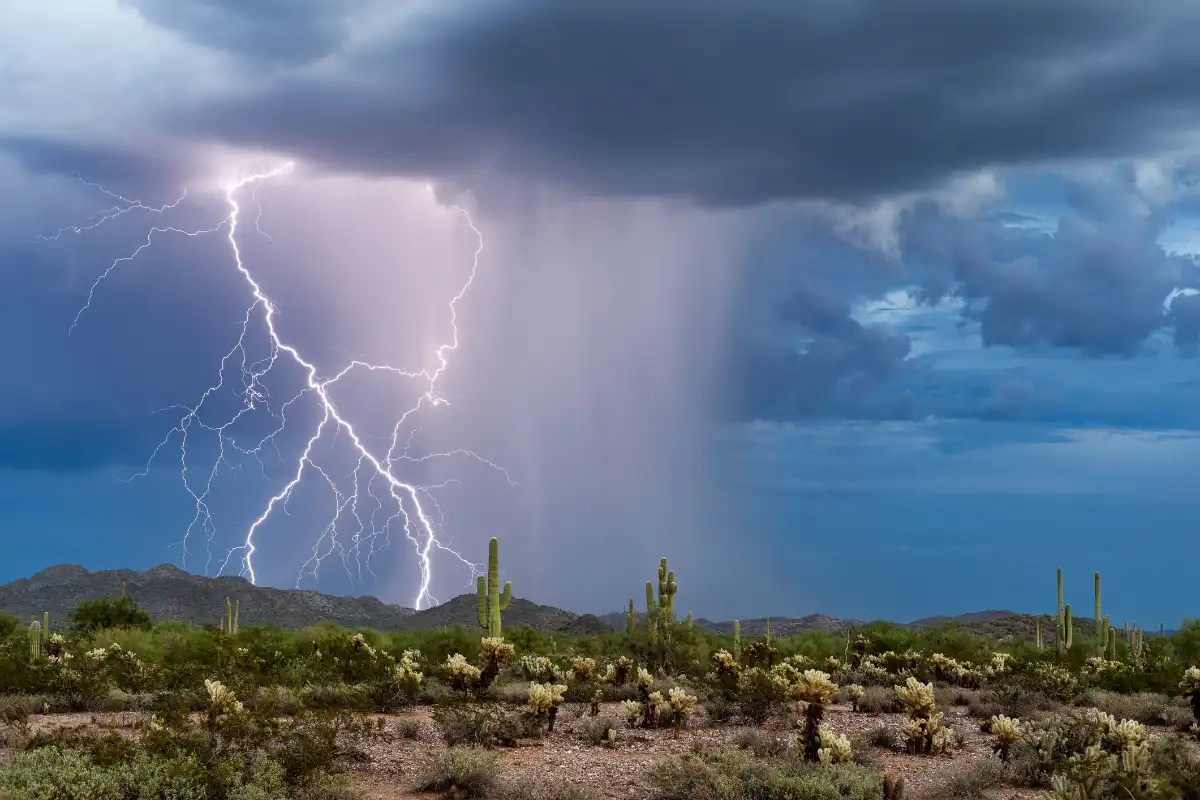
Arizona has had an unusually gradual warmup this year. Cooler mornings, comfortable afternoons, and a spring that felt like it lasted a little longer than usual. For business owners across Phoenix, Flagstaff, Prescott, and the Verde Valley, it’s been easy to focus on operations and push seasonal prep to the back of your mind.
But if you’ve run a business in Arizona for more than a season or two, you know how quickly the script flips. The heat doesn’t ease in. It arrives all at once. And right behind it comes monsoon season, bringing flash floods, high winds, hail, and dust storms that can shut down operations, damage buildings, destroy equipment, and expose businesses to liability they weren’t prepared for.
The question isn’t whether monsoon season is coming. It is. The question is whether your business insurance coverage is ready for it.
What Monsoon Season Actually Means for Arizona Businesses
Arizona’s official monsoon season runs from June 15 through September 30. Across Phoenix, Flagstaff, Prescott, and the Verde Valley, the specific risks vary by elevation and geography, but no area is immune.
- Flash flooding. Arizona’s terrain funnels stormwater fast. Parking lots flood, loading docks fill with water, and inventory stored at ground level can be destroyed in under an hour. In Phoenix, street flooding can make facilities inaccessible for hours. In Flagstaff and Prescott, runoff moves quickly through mountain terrain into commercial corridors.
- High winds and microbursts. Wind events can damage roofs, blow out windows, collapse signage, and cause structural damage, especially to older commercial buildings or those with large flat roof surfaces.
- Higher-elevation markets like Flagstaff see hailstorms capable of damaging roofing, HVAC systems, vehicles in your fleet, and exterior equipment.
- Dust storms (haboobs). Common in the Phoenix metro and lower elevations, haboobs reduce visibility to near zero, damage equipment left outside, and can infiltrate HVAC systems and sensitive electronics.
- A dry spring combined with monsoon lightning creates serious wildfire risk. Businesses near forested areas in the Flagstaff, Prescott, and Verde Valley regions should pay particular attention to fire exposure.
- Power outages. Monsoon storms frequently knock out power for hours or longer. For businesses that depend on refrigeration, servers, or continuous operations, an extended outage can mean significant losses.
What Your Commercial Property Policy Does and Does Not Cover
This is where many business owners are surprised. A standard commercial property policy covers a meaningful range of storm-related damage, but it has gaps that can be costly if you don’t know about them before a claim.
Typically covered under a standard commercial property policy:
- Wind and hail damage to your building and roof
- Fire and lightning damage
- Damage to business personal property (furniture, equipment, inventory) from covered perils
- Structural damage from fallen objects
Not typically covered and where gaps often hurt most:
- Flood damage. Just like with homeowners insurance, flood is specifically excluded from standard commercial property policies. If floodwater enters your building from a wash overflowing, a storm drain backing up at grade level, or surface flooding, you need separate flood insurance to cover it. This gap catches business owners off guard more than almost any other.
- Business interruption caused by flooding. If a flood forces you to close, lost income and continuing expenses (payroll, rent, utilities) won’t be covered unless you have the right combination of flood and business interruption coverage in place.
- Sewer and drain backup. Storm-related sewer backup can cause substantial damage to commercial interiors. This typically requires a separate endorsement.
- Equipment breakdown. Power surges and outages during storms can damage HVAC systems, refrigeration, manufacturing equipment, and servers. Equipment breakdown coverage is a separate line that many policies don’t include by default.
- Outdoor property. Signage, fencing, landscaping, outdoor furniture, and equipment stored outside often have limited or no coverage under a standard policy.
Business Interruption: The Coverage That Protects Your Income, Not Just Your Building
One of the most important and most overlooked commercial coverages heading into monsoon season is business interruption insurance.
A storm can damage your building and make it temporarily unusable. While commercial property coverage can pay to repair or rebuild, it doesn’t replace the revenue you lose while your doors are closed. Business interruption coverage fills that gap, covering lost income and ongoing expenses like payroll, loan payments, and rent during the period of restoration.
For businesses that operate out of a single location, or that depend on consistent daily operations such as restaurants, contractors, retailers, medical offices, and manufacturers, even a few days of forced closure can create serious financial strain. Understanding what your policy triggers are, what the waiting period is, and how long the benefit period extends is critical before a claim ever happens.
The Flood Coverage Gap: A Real Risk Across All Four Markets
Whether your business is in Phoenix, Flagstaff, Prescott, or the Verde Valley, flood risk is real and underinsured in every market.
The assumption that flood insurance is only for businesses near rivers or in designated flood zones is a costly one. Flash flooding in Arizona doesn’t follow flood maps. It follows the terrain. Water can flood a commercial property miles from any mapped floodplain during a significant monsoon event.
Flood insurance for commercial properties is available through the National Flood Insurance Program (NFIP) and through private market carriers, which often offer higher limits and broader coverage than the federal program. There is typically a 30-day waiting period before a flood insurance policy takes effect, which makes right now the appropriate window to act before the season is underway.
Other Commercial Coverage Areas to Review Before the Season
Beyond flood insurance and business interruption, a pre-monsoon coverage review should include:
Commercial auto and fleet. Hail damage to vehicles, flood damage to fleet units, and accidents caused by monsoon weather conditions are all relevant exposures. Confirm your commercial auto policy includes comprehensive coverage for all vehicles in the fleet.
Contractors and outdoor operations. If your business involves field work, construction, landscaping, or any outdoor operations, monsoon season creates additional exposures around equipment, job site property, and workers compensation for weather-related injuries. Builders risk insurance should be in place for any active job sites.
Commercial umbrella. Liability exposure increases during monsoon season. Flooding on your property that injures a customer, a wind event that sends debris into a neighboring property, or a vehicle accident during a storm are all scenarios where a commercial umbrella policy provides an important additional layer of protection above your general liability and commercial auto liability.
Replacement cost vs. actual cash value. Does your commercial property policy cover the full replacement cost of your building and contents, or does it depreciate the value at the time of a claim? With construction costs still elevated, the gap between replacement cost and actual cash value can be substantial.
Roof condition and age. Many commercial carriers apply stricter guidelines and sometimes coverage limitations on older roofs. If your building’s roof is aging, a pre-season inspection and a review of your policy language is worth the time.
A Note for Homeowners
If you’re also a homeowner in northern Arizona, the same monsoon exposures apply to your personal property. Flood damage is excluded from standard homeowners policies, sewer backup requires a separate endorsement, and replacement cost coverage matters here just as much as in a commercial setting. If you haven’t reviewed your home insurance alongside your business coverage, that’s a conversation worth having at the same time.
Don’t Wait Until You Hear Thunder
The slower start to summer this year has given businesses a bit of extra time. Don’t let that window close without using it.
Monsoon season in Arizona arrives fast, and claims follow quickly. By the time water is in your building, operations are interrupted, or equipment is damaged, it’s too late to add coverage. The time to review your policy, identify gaps, and get the right protection in place is before the storms hit.
At Butler-Leavitt & LGNA, we work with business owners across Phoenix, Flagstaff, Prescott, and the Verde Valley to make sure their commercial coverage is built for the risks they actually face, not just the ones that are easy to check off. As an independent insurance agency, we work with top national and regional carriers to find solutions that fit your business, your location, and your budget.
Contact us today to schedule a pre-monsoon coverage review for your business.