
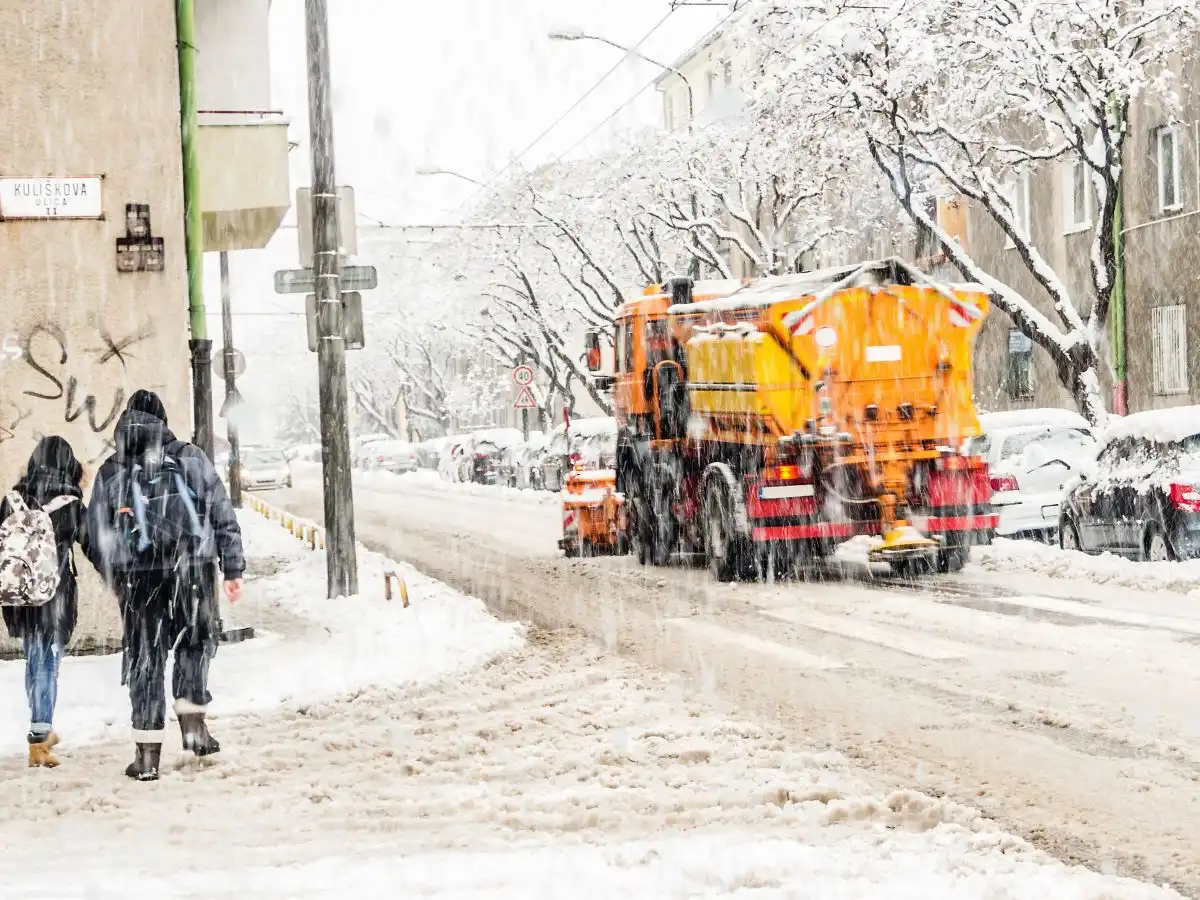
Documenting preparation before a storm hits is one of the most effective ways to demonstrate due diligence if you need to file a claim. Carriers consistently emphasize that preventive actions can reduce damage severity and support faster claim resolution.
Building & Property Preparedness Checklist
Before the storm arrives, consider taking the following steps and document their completion with dates, photos, and logs when possible:
Exterior & Grounds
- Inspect roofs for loose materials, flashing, or existing damage
- Clear gutters, downspouts, and storm drains to prevent water backup or ice dams
- Secure outdoor furniture, signage, trash receptacles, and equipment
- Remove snow, ice, or debris hazards from walkways and entry points where feasible
- Apply ice melt or sand to high-traffic pedestrian areas
- Check exterior lighting for functionality and visibility during reduced daylight
Interior Systems
- Verify heating systems are operational and set to maintain consistent temperatures
- Insulate exposed pipes and shut off nonessential water supply lines
- Drain exterior faucets and irrigation systems
- Test sump pumps and confirm backup power sources are functional
- Ensure fire protections (sprinklers, alarms) remain heated and operational
- Back up critical business data and systems
Documentation (Carrier‑Recommended Best Practice)
- Photograph the condition of roofs, entrances, interior spaces, and critical equipment
- Retain maintenance and inspection records
- Record dates and personnel responsible for storm preparations
- Keep weather alerts and internal communications related to preparedness
Fleet & Commercial Auto Preparedness Checklist
For businesses with vehicles or mobile equipment, winter driving precautions are also a key carrier focus.
Vehicle Readiness
- Inspect tires (tread depth and air pressure)
- Verify brakes, windshield wipers, and defrosters are functioning properly
- Top off windshield washer fluid rated for freezing temperatures
- Ensure headlights, brake lights, and hazard lights are operational
- Fuel vehicles at least half full prior to the storm
Safety & Operations
- Limit nonessential travel during severe weather conditions
- Adjust delivery schedules or routes as weather dictates
- Remind drivers to reduce speed and increase following distance
- Prohibit phone use and distracted driving during hazardous conditions
- Require rest breaks to prevent fatigue
Emergency Preparedness
- Stock vehicles with winter emergency kits (blankets, flashlights, reflective gear)
- Confirm drivers have emergency contact numbers and reporting procedures
- Reinforce accident reporting and documentation protocols
Documentation for Claims Support
- Maintain vehicle inspection checklists
- Log driver communications and safety reminders
- Document route changes or delivery delays due to weather advisories
Why Documenting Preventive Measures Matters for Claims
Carriers often evaluate:
- Whether reasonable precautions were taken
- Whether property and vehicles were properly maintained
- Whether exposure reduction steps were documented in advance
Following and documenting these steps can:
- Reduce damage severity
- Strengthen claim support
- Speed up claims handling
- Demonstrate proactive risk management
We’re Here to Support You
As this weekend’s storm approaches, please know that our team is here to support you—whether you have questions about preparedness, coverage considerations, or need assistance after the storm passes.
Thank you for trusting us with your business. We truly appreciate the opportunity to serve as your risk management partner and are here for you every step of the way.
Stay safe, and don’t hesitate to reach out if you need us
Have questions? Contact:
